Gods, heroes, and the grammar of legend
Trace Olympus through epic cycles, votive ritual, and material culture — letting poetry guide geography without collapsing one into the other.
Enter the FieldIssue 01 — Mount Olympus
Journey across the landscapes, stonework, and living myths that forged the image of Olympus — from the verses of Hesiod to the limestone massif where earth and sky still collide.
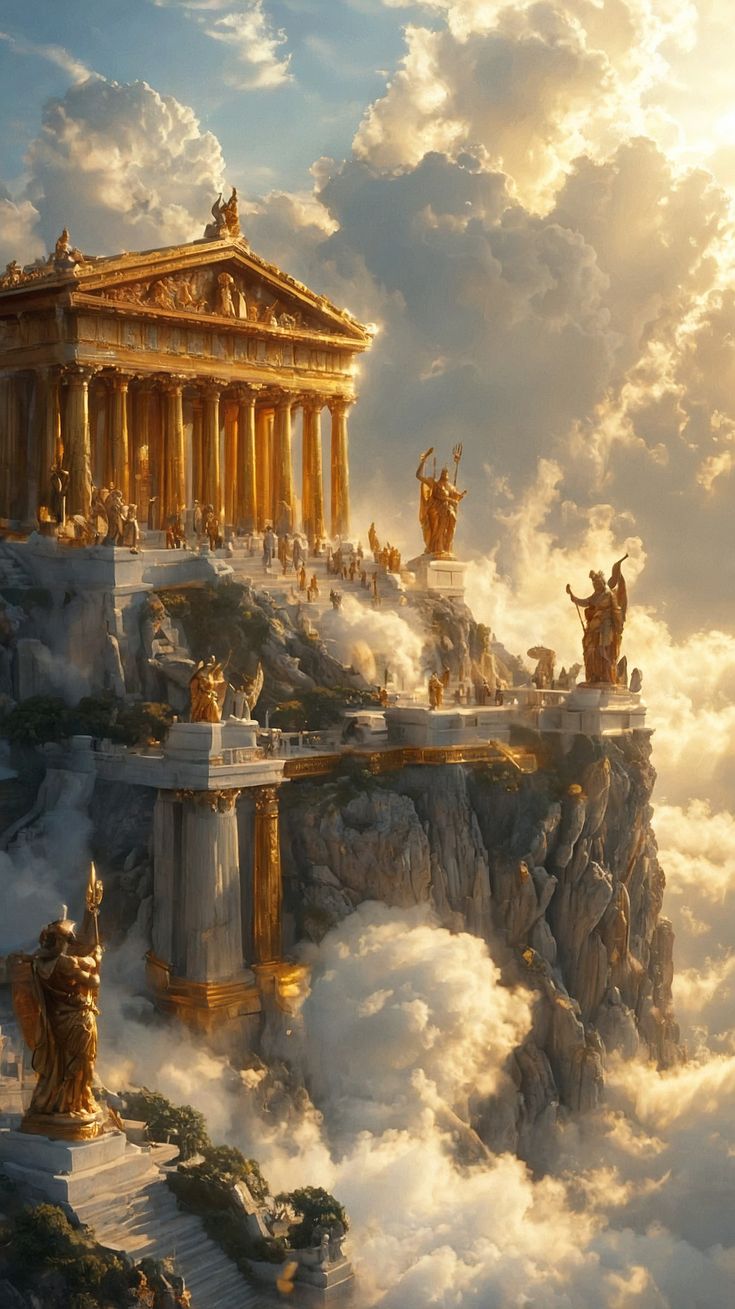
Myth, architecture, and weather overlap in cultural memory. Our structure keeps their evidence distinct.
Trace Olympus through epic cycles, votive ritual, and material culture — letting poetry guide geography without collapsing one into the other.
Enter the FieldMove from ashlar proportion to quarry, from terracotta revetment to the hands that raised sacred precincts across the Greek world.
Enter the FieldKeep Zeus's thunderbolt in its mythic frame while tracing atmospheric discharge through the physics of charge separation and return stroke.
Enter the FieldA real summit, an immovable cloud line, and generations of poetry made Olympus both a place on the map and a divine address.
Orders, proportional systems, and a sequence of porch, inner chamber, and surrounding colonnade shaped the temple experience.
The thunderbolt identifies Zeus in texts and images — yet an absent attribute can make an ancient figure difficult to name.
Temples were built from coordinated stone, timber, metal, and color — not from an imaginary world of uniform white marble.
Limestone peaks, deep ravines, and a changing mountain climate define Olympus beyond its literary fame.
Modern books, films, and visual worlds do not simply preserve myths; they select, combine, and rewrite them.
Landscape, objects, texts, and weather — each article opens with a specific question and closes with the record behind it.
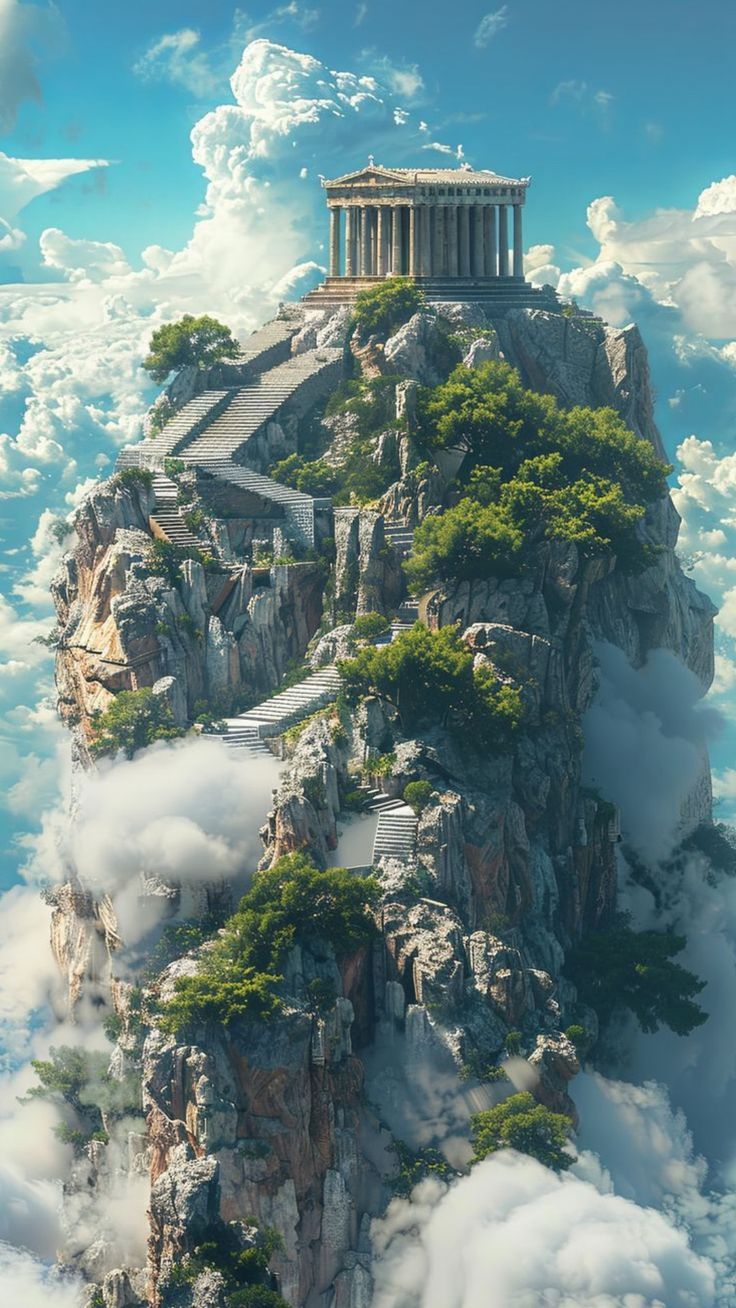
A real summit, an immovable cloud line, and generations of poetry made Olympus both a place on the map and a divine address.
Read Article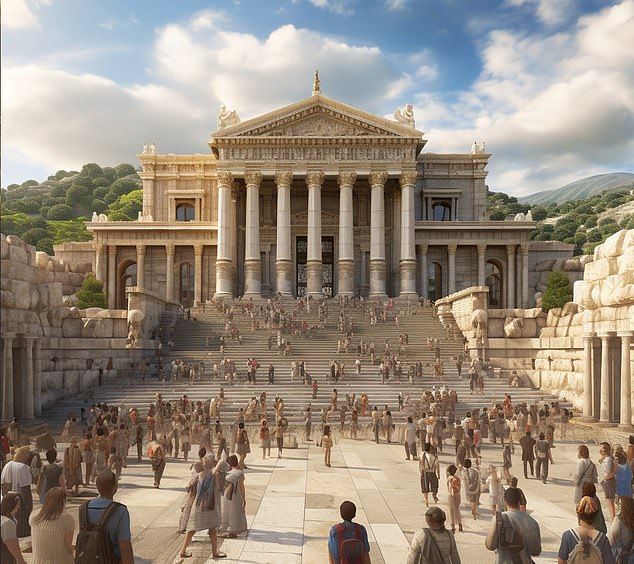
Orders, proportional systems, and a sequence of porch, inner chamber, and surrounding colonnade shaped the temple experience.
Read Article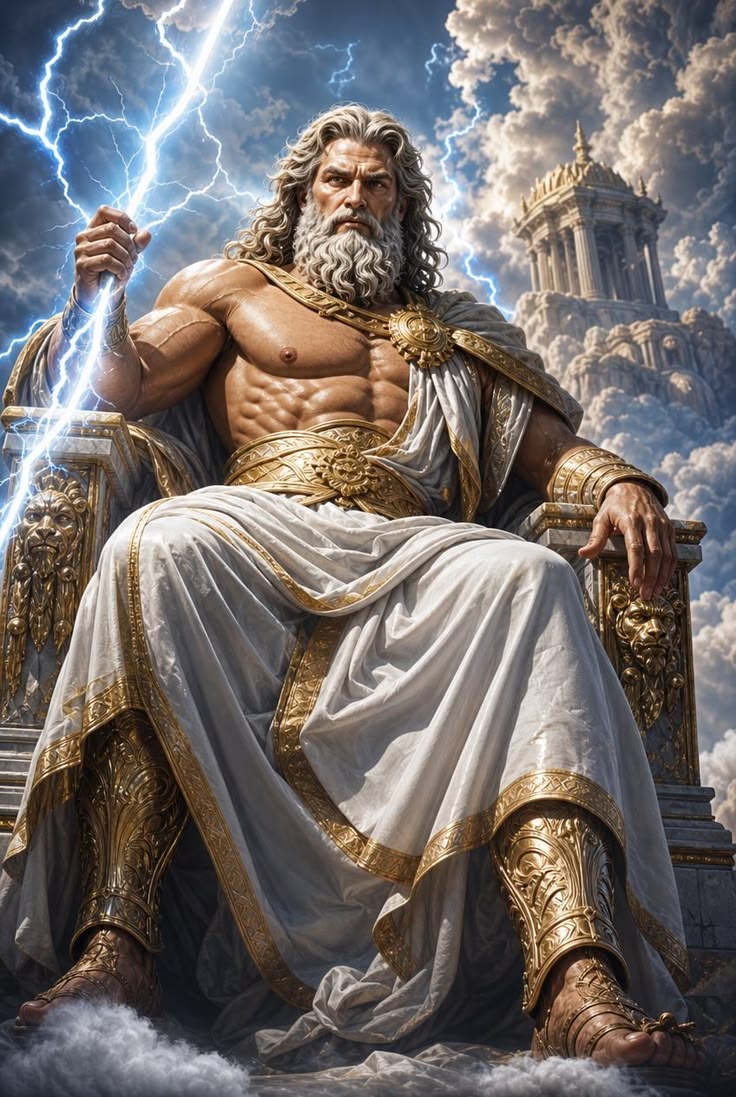
The thunderbolt identifies Zeus in texts and images — yet an absent attribute can make an ancient figure difficult to name.
Read Article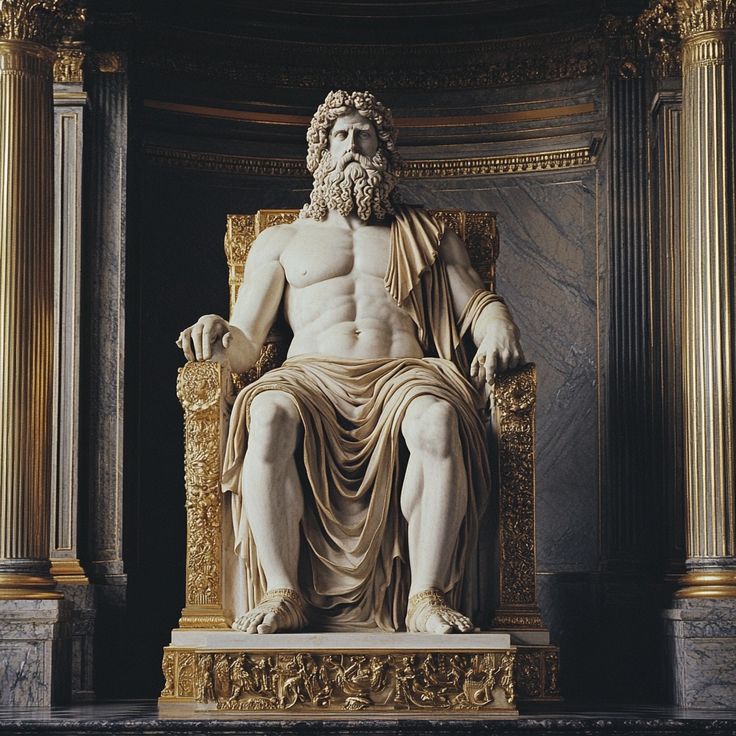
Temples were built from coordinated stone, timber, metal, and color — not from an imaginary world of uniform white marble.
Read Article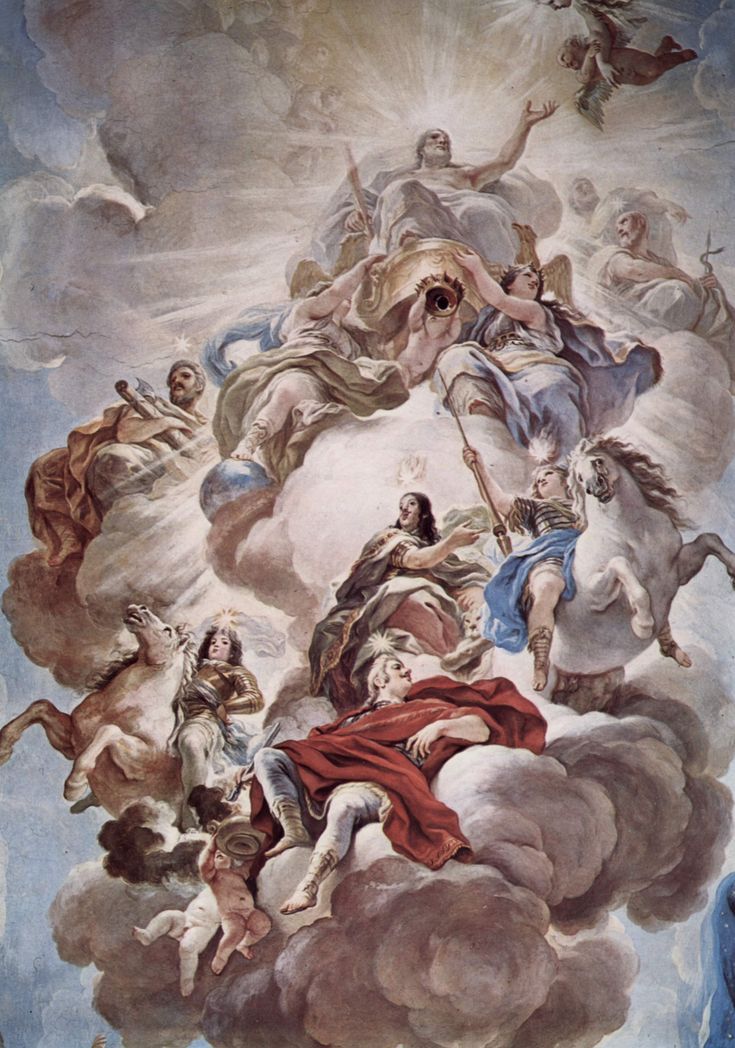
Limestone peaks, deep ravines, and a changing mountain climate define Olympus beyond its literary fame.
Read Article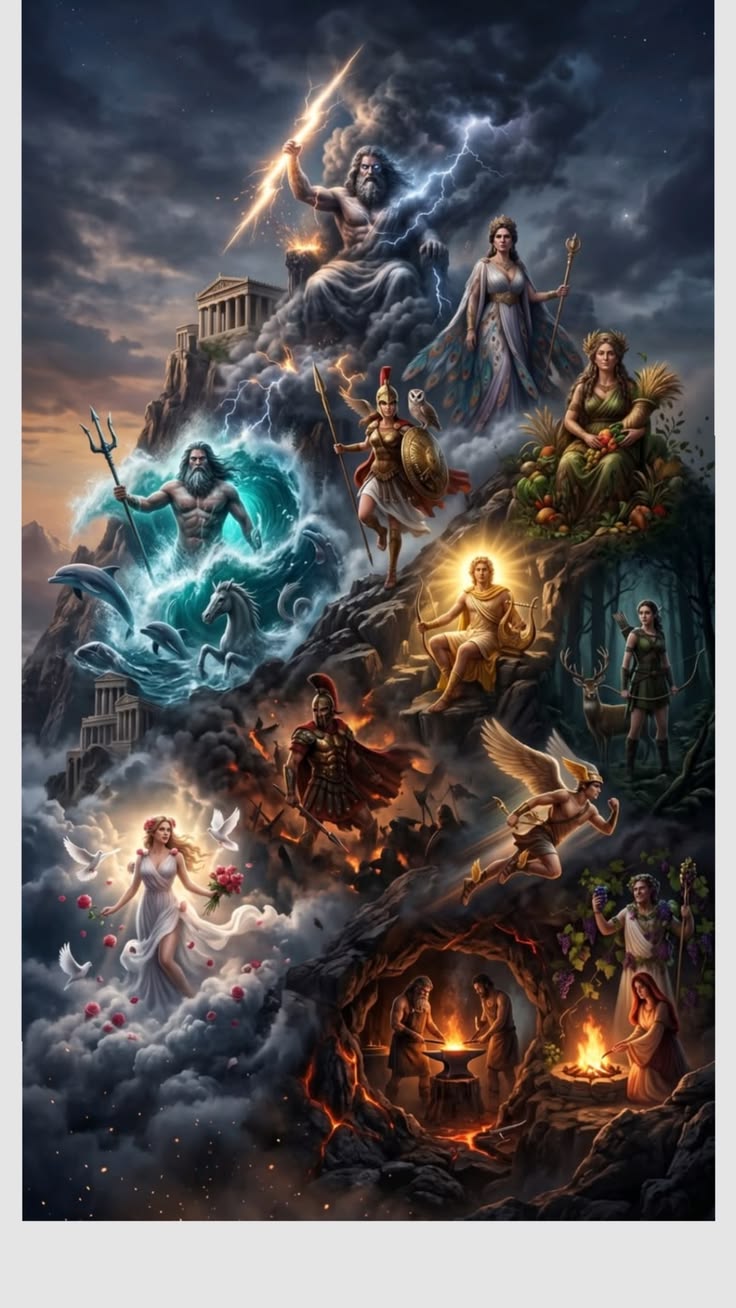
Modern books, films, and visual worlds do not simply preserve myths; they select, combine, and rewrite them.
Read Article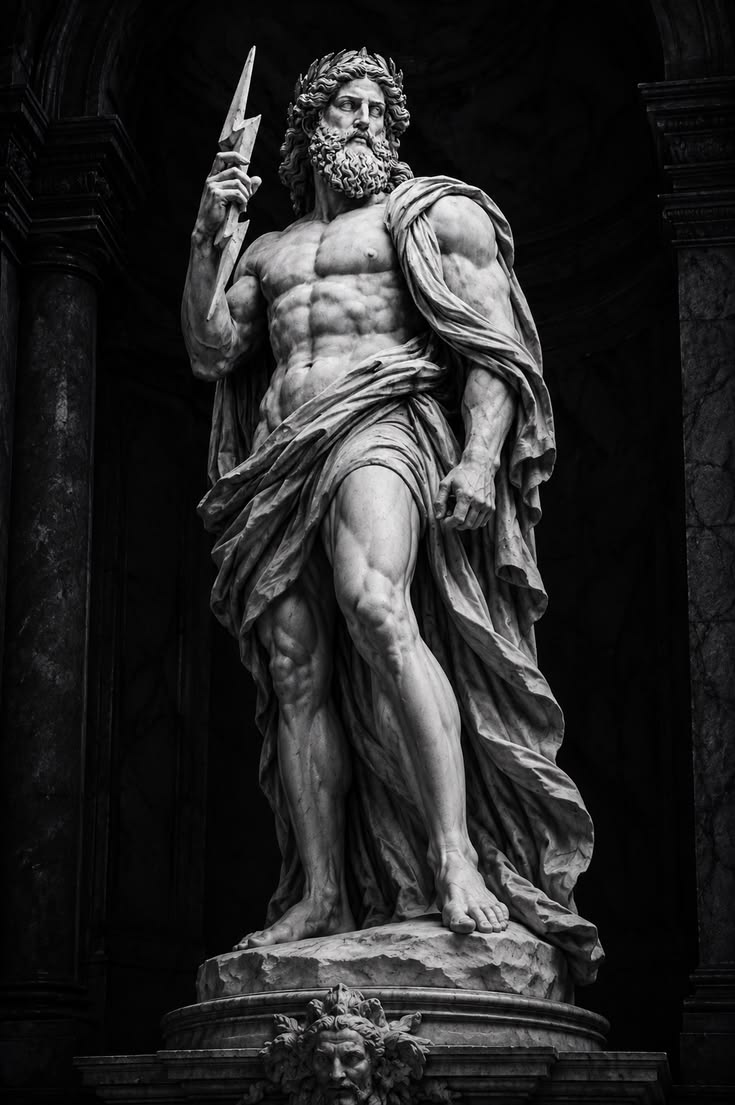
How vessels, weapons, and animals identify divine figures — and what happens when enough of the object survives.
Read Article
The three familiar orders are systems of proportion and detail, not merely interchangeable capital designs.
Read Article
A concise, source-led account of charge separation, the lightning channel, and the shock wave we hear as thunder.
Read ArticleThe mountain in data — from its highest peak to the first recorded ascent.
Mytikas, the summit where mortals first stood in the realm of the gods.
Each with its own ridge, glacier, and place in local topography.
The canonical pantheon whose residence shifted with every poet and city.
Christos Kakalos, a Greek hunter, reached Mytikas before any mountaineer.
The canonical pantheon — names, domains, and the attributes that identify them in art and text.
The thunderbolt and the eagle. Son of Kronos, king of the third generation.
The peacock and the sceptre. Sister and consort of Zeus, guardian of oaths.
The trident and the dolphin. Lord of the waters that surround the world.
The sheaf of wheat and the torch. Mother of Persephone, bringer of famine and plenty.
The aegis and the owl. Born from the head of Zeus, patron of Athens.
The lyre and the laurel. Twin of Artemis, lord of Delphi and the sun's path.
The bow and the deer. Virgin goddess of the hunt, protector of the young.
The spear and the vulture. The raw force of battle, unloved by gods and mortals alike.
The dove and the rose. Born from sea-foam, mother of Eros, irresistible.
The hammer and the tongs. The lame smith who forged the thunderbolt itself.
The caduceus and the winged sandal. Psychopomp, guide of souls to the underworld.
The thyrsus and the leopard. The twice-born, who turns chaos into catharsis.
Five things popular culture gets wrong about ancient Greece — and what the evidence actually shows.
The evidence: Traces of paint survive on nearly every major sculpture. The Parthenon frieze was vivid red, blue, and gold. What we see today is the result of two millennia of weathering, not original intent.
The evidence: Terracotta revetment, bronze doors, gilded acroteria, and painted metopes turned sanctuaries into polychrome landmarks visible from miles away.
The evidence: There was no canonical bible. Hesiod, Homer, and local cults told conflicting stories. A myth in Athens could be heresy in Thebes.
The evidence: Greek sculpture was idealised, not documentary. The heroic nude was a convention borrowed from Near Eastern and Egyptian precedents, not a snapshot of the gymnasium.
Four places where the boundary between mortal and divine was drawn in stone, oracle, and ritual.
The residence of the gods in epic poetry and the highest peak in Greece. Its limestone massif and permanent cloud line made it a natural symbol of the divine threshold.
The omphalos — navel of the world — where the Pythia spoke in riddles from the temple of Apollo.
Home of the ancient Olympic Games and the chryselephantine statue of Zeus, one of the Seven Wonders.
The sanctuary of Asclepius, where incubation sleep and theatrical performance were prescribed as medicine.
The objects that identify a god when inscription fails — a field guide to reading Greek art.
Zeus. The weapon forged by the Cyclopes, signifying supreme authority over gods and mortals.
Poseidon. Three-pronged spear of the sea-god, capable of summoning earthquakes and tidal waves.
Athena. The goatskin fringed with serpents, bearing the head of Medusa — shield and armour in one.
Apollo. The seven-stringed instrument of music, prophecy, and cosmic order.
Artemis. The silver bow that brings sudden death to women, as her brother's brings it to men.
Hephaestus. The forge-tool that shaped armour for Achilles, a throne for Hera, and the thunderbolt itself.
A generalised plan helps orient the reader. Real sanctuaries varied across time, place, and religious practice.
Typically a peripteral colonnade with a plain capital and an entablature structured by triglyphs and metopes.
A moulded base, a more slender shaft, and scroll-like capital support a continuous frieze.
Layered leaf forms distinguish the order developed in the late Classical period and widely used later.
| Structure | Wall | Roof frame | Roof covering | Surface |
|---|---|---|---|---|
| Cut masonry | Stone or mud brick | Timber | Terracotta or marble tiles | Carving and painted detail |
The ancient thunderbolt conveys divine agency. Atmospheric science describes electrical charge and discharge. We do not collapse one into the other.
In Greek poetry and visual culture, thunder and lightning make the authority of Zeus immediate and visible. The thunderbolt is an attribute inside a mythic system.
Read the symbolCharge separates inside a storm. A conductive channel develops; the return stroke creates the visible flash. Rapidly heated air expands and produces thunder.
Follow the physicsEditorial responsibility means showing not only what we know, but how certain we are and when a page was reviewed.
Heritage records and science agencies that readers can open themselves.
No story from antiquity is ever presented as an archaeological discovery or a modern scientific explanation.
If a museum describes a figure as "Zeus or Poseidon," we preserve that qualification rather than invent certainty.
Every article carries a publication date, a last review date, and an institutional editorial desk responsible for it.
The UNESCO World Heritage Centre listing for Mount Olympus National Park provides the official boundary, criteria for inscription, and management documents.
The Metropolitan Museum of Art Heilbrunn Timeline offers a curated overview of Greek architectural orders, materials, and regional variation.
The National Oceanic and Atmospheric Administration publishes plain-language explanations of charge separation, stepped leaders, and return strokes.
The Perseus Digital Library at Tufts University hosts the Greek text, English translations, and morphological analysis.
Hesiod's account of the Olympian succession remains a foundational text for understanding how the mountain became a divine residence.
The British Museum collection database includes object records, provenance, and scholarly attribution for votive figures and vessels.
Mount Olympus is located on the border between the Greek regions of Thessaly and Macedonia, approximately 80 kilometres southwest of Thessaloniki. Its highest peak, Mytikas, rises to 2,917 metres above sea level.
In epic poetry and later cult, Olympus served as the permanent residence of the twelve Olympian gods. Its physical height, frequent cloud cover, and inaccessibility made it a natural symbol for the boundary between mortal and divine realms.
The canonical twelve are Zeus, Hera, Poseidon, Demeter, Athena, Apollo, Artemis, Ares, Aphrodite, Hephaestus, Hermes, and either Hestia or Dionysus depending on the source. We follow ancient lists rather than modern simplifications.
They were not white. Surviving marble retains traces of paint; terracotta, bronze, and gold elements were common. Most temples followed a rectangular plan with a surrounding colonnade, a front porch, and an inner chamber housing the cult statue.
In Hesiod's Theogony, Zeus receives the thunderbolt from the Cyclopes as a weapon of authority. In visual culture, the thunderbolt becomes his primary attribute — a shorthand that allows viewers to identify the king of gods even in fragmentary reliefs.
Each article begins with a specific question, moves through archaeological reports, object databases, and peer-reviewed science, and ends with a dated reference list. We distinguish mythic narrative from physical evidence and label uncertainty where it exists.
Olympus Atlas is an editorial publication operated by Olympus Atlas Cultural Review ULC. Its articles use clearly named institutional desks rather than fictional personal profiles. Each Myth & Texts Desk, Architecture & Material Culture Desk, Earth Science Desk, and Editorial Standards Desk entry is attributable to a named editorial process.
Personal bylines will be added only when a real contributor provides and approves their name and biography. The Editorial Standards Desk owns corrections, source checks, and site-wide updates.